

Dear fellow empath,
in this edition of our newsletter you’ll find:
🌱 What is climate justice? Collective rights, demilitarization, and decolonialization for system change are not optional.
💧 How do you go through a crisis of meaning? Join us for our next noe circle with integrative life coach Jean-Baptiste MacLuckie on November 30 at 3 pm CET.
🪴 Where to find community spaces this month and reading recommendations on climate justice.
Enjoy!
Your noe team
Did a friend forward you this email? Sign up to get your own copy of the noe newsletter to your inbox with inspiration, empathy knowledge, and community building.
Contribute! You would like to contribute to our community column, be featured by our noe stories, or join our next noe circle? Shoot us an email: contact@networkofempathy.org
🌱 Planting Seeds
In this section we share thoughts and concepts around empathy that have inspired us and made us think.
No Climate Justice without Human Rights
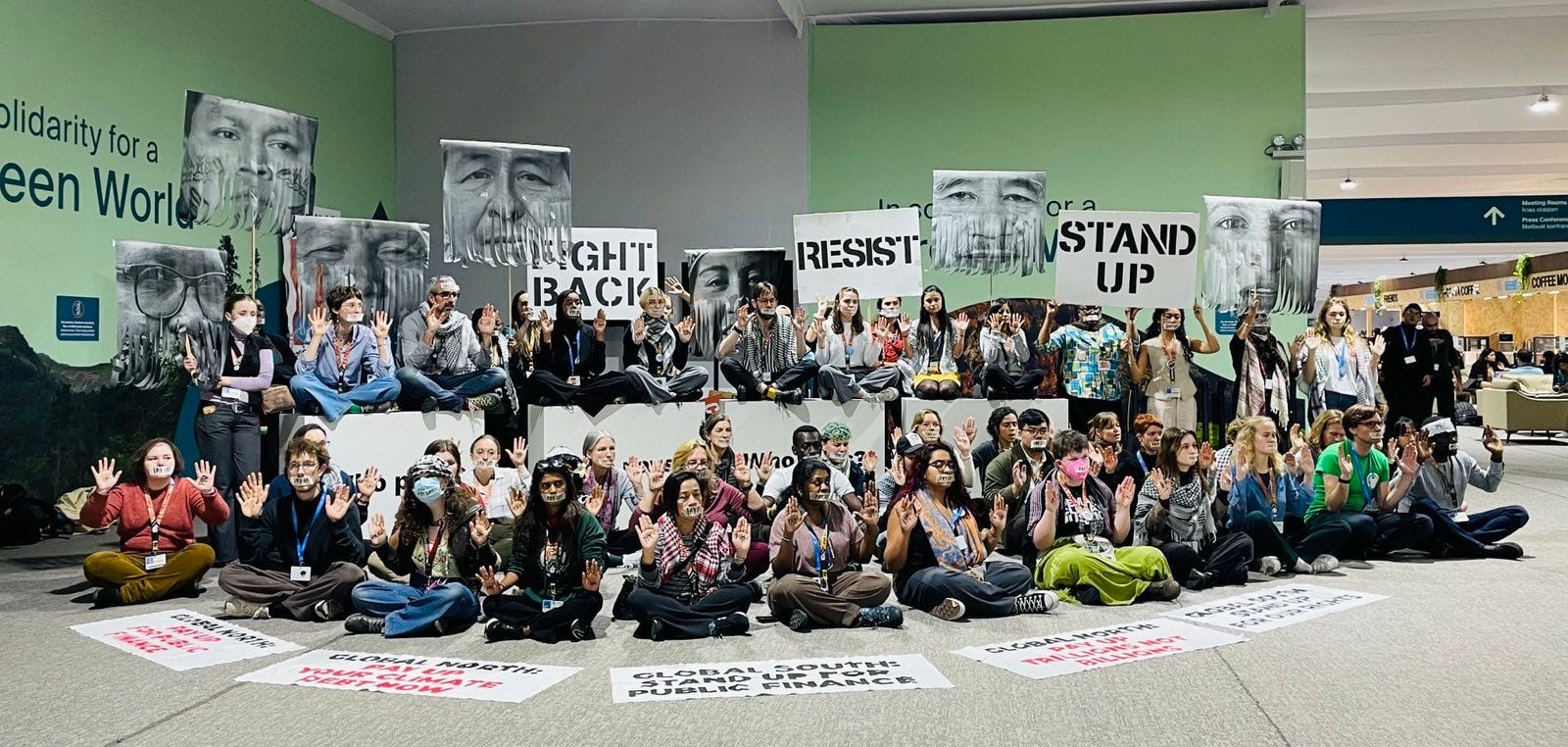
“The People’s Plenary at COP29 is a powerful reminder that the true power in the climate crisis lies not with the diplomats in their VIP rooms, but with the people. While governments continue to stall and manipulate, it is the voices of communities on the frontlines, grassroots activists, and youth leaders that are driving the conversation. This plenary is a declaration that people have always held the power to change the course of history.”
Tasneem Essop, Climate Action Network International
Climate change is inherently a justice issue. Together North America and Europe have historically contributed to around 62% of the total greenhouse gas (GHG) emissions since the beginning of the industrial age (OurWorldinData.org). While regions, countries, and communities that have the least emissions such as Africa (a historical total of 3% of emissions), they bear the brunt of the climate crisis. In particular, marginalized communities such as women, girls, people with diverse sexual orientation, gender identity, gender expression and sex characteristics (SOGIESC), people with disability, migrants, refugees, and displaced persons are the most affected. This is due to intersecting forms of discrimination and oppression based on gender, race, ethnicity, and socioeconomic status that effectively marginalize and put these populations in vulnerable situations.
Despite the facts, science, and historical responsibility, the Global North continues to shirk its responsibilities in climate action and climate finance. The wealth and power of the North has been and continues to be built on the backs, bodies, blood, and land of the Global South. So, more accurately, climate finance is not charity, but a redistribution of stolen wealth and resources. It is a responsibility and legal obligation as outlined in the United Framework Convention on Climate Change (UNFCCC) of the countries that have and continue to drive the climate crisis. It is a matter of justice and equity. The South is owed reparations and the North must pay its climate debt for the destruction its industrialization, extractivism, and consumption has caused.
COP29 has once again conveyed the depth of lack of political will and heartlessness of the Global North as they sit idly by not only watching the world burn, but actively and intentionally disempowering and disenabling local communities in the Global South. The current trajectory of GHG emissions is setting us on a track of a global 3 degree Celsius temperature increase. Climate catastrophe is imminent. Instead of financing climate action and ambitiously reducing GHG emission reductions, they fund genocide, occupation, and war and the proliferation and subsidization of fossil fuel extraction, production, and consumption. While the Global North claims there is not enough public funds to finance climate action, in 2023 alone, they have spent 2.4 trillion USD on war and genocide.
The UNFCCC’s Standing Committee on Finance published the second needs determination report (NDR), a compilation of developing countries’ costed needs for adaptation, mitigation, and loss and damage. It was determined that $5.012-6.852 trillion will be required cumulatively until 2030, a number that already underrepresents the entire costs required for climate action. Yet, at COP29, the North has proposed and shoved an abysmal goal for climate finance down the South’s throats: 300 billion USD per year until 2035. The decision on the climate finance, the New Collective Quantified Goal (NCQG), in reality is much less when taking into account inflation. In addition, according to the Convention and principles of common but differentiated responsibilities and respective capabilities (CBDR-RC), equity, and justice, climate finance should be provided and mobilized by the Global North. However, the North has abdicated its historical responsibility by broadening the pool of contributors, looking for private sector financing (whose priorities are for their own profit -one of the root causes of the climate crisis, injustice, and exploitation and abuse) and asking affected people in developing countries to pay for the climate damage they have not caused.
In addition, without the exclusion of carbon markets, market-based loans, and export credit, climate finance will not address climate impacts, but continue business as usual. By using multilateral development banks (MDBs) as key vehicles for climate finance delivery, it will perpetuate the status quo -where loans, privatization, and policy conditionalities such as austerity measures exacerbate gender inequality and violate human rights.
We need system change, not climate change
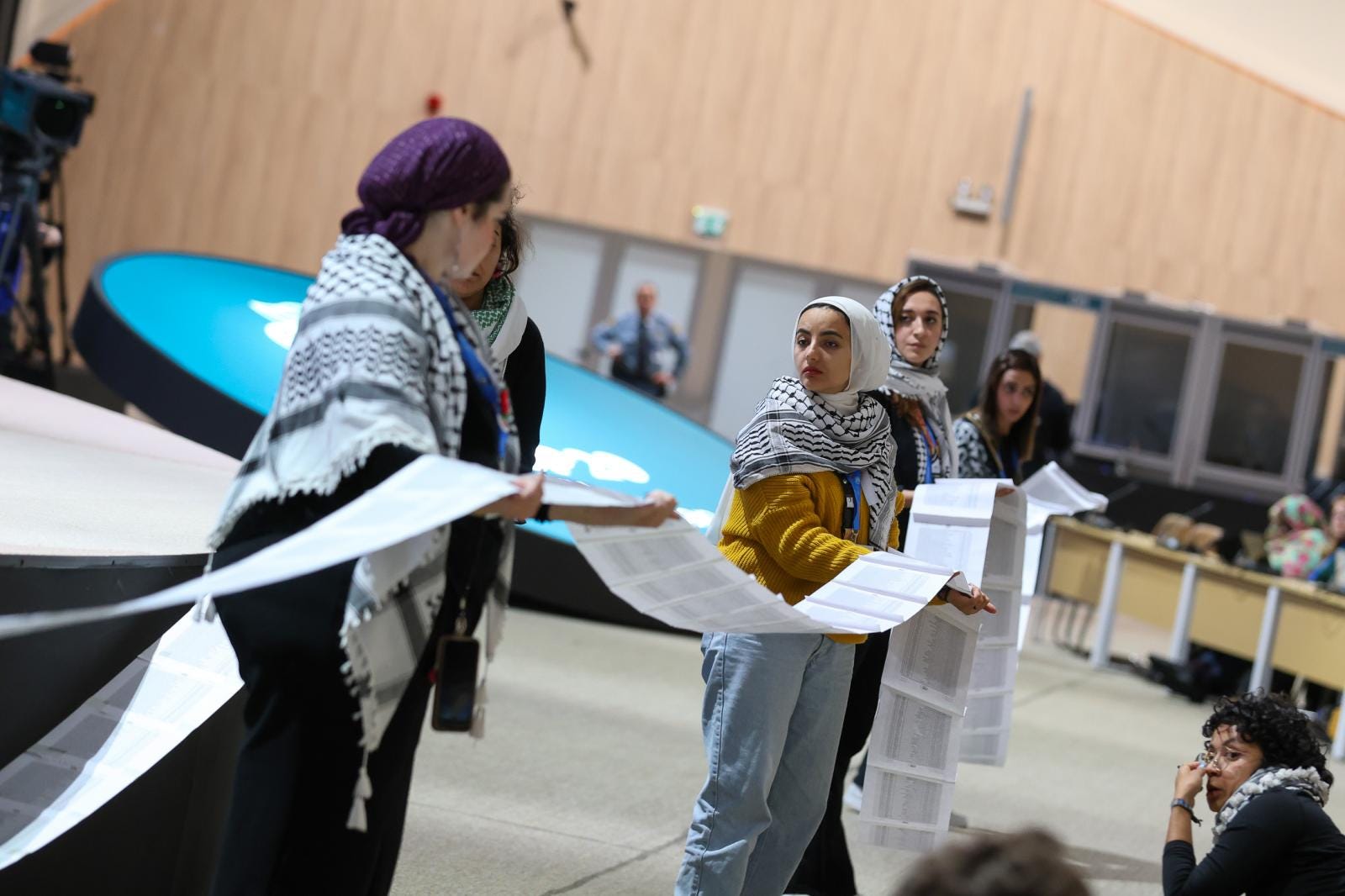
The climate crisis is a direct result of a system of interconnected injustices and inequalities that create targeted and intentional barriers and disenablers for marginalized communities and the Global South more generally. Patriarchy, colonialism, capitalism, and militarism reproduce and thrive on disparities, systemically hoarding power and wealth in the Global North, including through corporate capture.
Centering and investing in gender equality and gender responsiveness is a matter of survival for women and girls and people with diverse SOGIESC. Climate change disproportionately impacts women, girls, and marginalized communities, exacerbating existing disparities. Due to existing structural barriers and gendered norms and responsibilities, women, girls, and gender diverse individuals are made vulnerable to climate change. Coupled with intersecting climate impacts such as food and water insecurity, extreme weather events, and droughts, women and girls in all their diversity carry heavier burdens. For example, during droughts or following disasters, household can and have married of their children through child, early, and forced marriages to alleviate financial pressure (read more on climate impacts on SRHR). Water collection and management in households are often a gendered responsibility of women and girls. With a rise in the frequency and severity of droughts, women and girls are having to walk longer distances to fetch water. This makes them more exposed to gender-based violence (GBV), exploitation, physically demanding stress, as well as increases the time spent of water collection which can be used in other opportunities such as education. Lack of access to credit, capital, and land tenure make food and water insecurity difficult to adapt to and mitigate -without money or control over land, they have less options to cope with these impacts such as buying food.
Patriarchy, capitalism, extractivisim, colonialism, genocide, war, and occupation have created systemic barriers that intentionally target, abuse, and disempower women, girls, people with diverse SOGIESC, and marginalized communities. As leaders at the forefront of the climate crisis, we don’t need empowerment, we don’t need solutions, we need system change that enables us to effectively adapt and address losses and damages.
The systems of injustice referred to above are interconnected, reproducing and perpetuating violence and inequity. This is clearly conveyed in the fossil fuel industry that not only profits from the climate crisis, but also from exploitation, human rights abuse, and genocide and occupation. War requires energy and the trade regime exporting and transporting fuel to Israel enables and benefits from the destruction of the environment and the eradication and suffering of Palestinians, Lebanese, Sudanese, Syrians, Yemenis, and too many more from around the world such as the Democratic Republic of Congo.
Dangerous narratives
The emphasis on “building adaptive capacity and resilience” to climate impacts places the burden on us to accept and deal with the status quo as the Global North continues its rampant emissions and extractivism instead of committing to a pathway to maintain a 1.5-degree trajectory.
Contraception and family planning have also often been positioned as mitigation measures to control population growth. However, this narrative places an unjust burden of climate mitigation on the people and communities least responsible and distracts from the true drivers of the climate crisis.
Climate mitigation requires tackling the unsustainable and damaging production and consumption patterns of wealthy countries. Redirecting attention away from the perpetrators of climate change to controlling people’s bodies, especially those already place in vulnerable situations, will not solve the climate crisis, but perpetuate it.
💧 Watering the Mind
In this section we share updates from the noe team and concrete offers that allow you to build emotional intelligence and resilience skills.
What does it mean to find your purpose in life?

Join us for our next noe circle this Saturday, 30th of November at 3 pm CET. We are excited to be joined by guest storyteller Jean-Baptiste MacLuckie (@iamjbmacluckie). Jean-Baptiste is an integrative life coach and self-described radical dreamer whose mission it is to empower creatives to break free from inner resistance, so they are free to dream, express their art and inspire the world. Based on his own experience of navigating a crisis of meaning and guiding others in creating a meaningful life, we will deconstruct what it mens to find a life purpose.
Are you interested in joining our circle?
Sign up through the link below!
If you would want to join our community or support us, don’t hesitate to get in touch at contact@networkofempathy.org.
🪴 Vines of Community
In this space we foster connection and inspiration by sharing stories, poems, and thoughts of community members.
Events
Berlin/ Day Retreat of Care and Community (Dec. 1, 2024)
More infos and registration here
Resources on climate justice
Women & Gender Constituency Demands for COP29
On false solutions for climate change
The dangers of market-based solutions
A brief glimpse into climate finance, gender and climate finance, and decolonial finance
Understanding loss and damage
Reproductive justice: Why family planning and contraception are not climate solutions
Effective climate solutions are gender-just
Towards Climate Justice: Redistributing Military Spending to Climate Finance