

Dear fellow empath,
in this edition of our newsletter you’ll find:
🌱 Do you feel it too? Our call to action against the empathy deficit.
💧 Recap of our last noe circle Circling Back (also, sign up now for our next circle in November!).
🪴 Rimma’s book recommendations that make us reconnect with our empathy this fall.
Enjoy!
Your noe team
Did a friend forward you this email? Sign up to get your own copy of the noe newsletter to your inbox with inspiration, empathy knowledge, and community building.
Contribute! You would like to contribute to our community column, be featured by our noe stories, or join our next noe circle? Shoot us an email: contact@networkofempathy.org
🌱 Planting Seeds
In this section we share thoughts and concepts around empathy that have inspired us and made us think.
The Empathy Deficit - A Call to Action
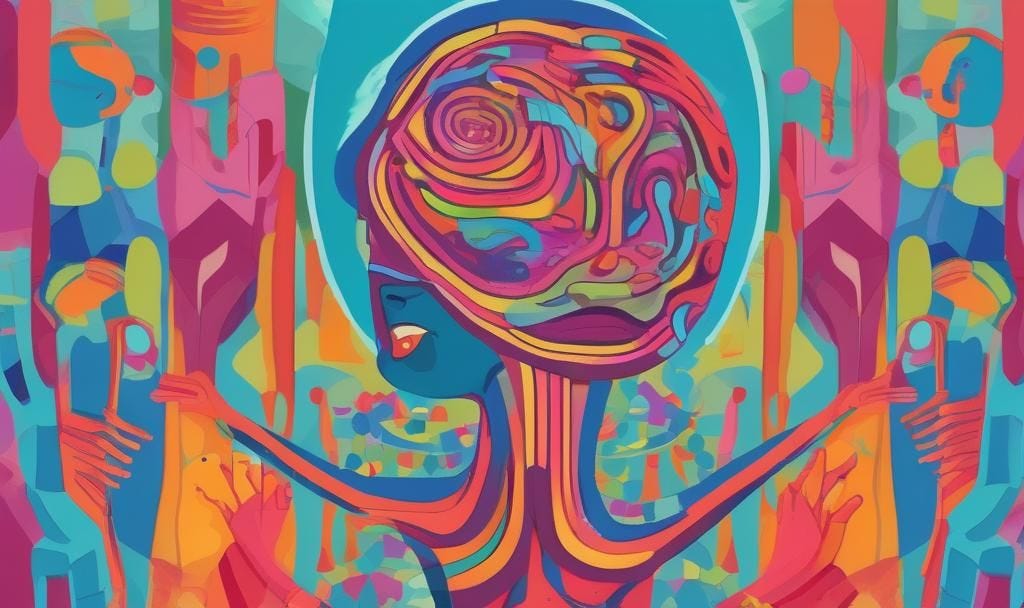
Do you feel it too? This general sense that the world currently lacks empathy? It feels like the unwritten rule to find common ground around our shared humanity has been lifted. Thinking, saying and doing things that push us further apart receive increasingly more applause than reaffirming the “we”. The “us” and the “them” grow taller, sometimes without us noticing - while nobody actually knows who “they” are. But still, these words drive conflict and genocide in ways that make resolution an impossible feat and peace a distant dream. And while we wait for somebody to jump up, to raise their hand and scream “What the hell are we doing here?”, our hearts slowly hollow out. However, at some point we come to realize that nobody will jump up, if not us. So what can we do?
What is the empathy deficit?
Empathy, the ability to perceive and share another person’s feelings, is the basis for social connection. However, as we are confronted with more suffering around us, especially in the form of escalatory violent conflict and genocide, we are increasingly seeing what can be described as an "empathy deficit". In a piece by Jennifer Rubin published in the Washington Post in February 2023, this deficit is defined as
“a collective inability (or refusal) to see the world from others’ perspectives, to understand people’s fears and hopes and our shared humanity”
This deficit reflects a societal shift where people are less able to step into others' shoes, and more inclined to focus on their own goals, emotions, and well-being. What has been known as a psychological pathology, namely "Empathy Deficit Disorder" (EDD), has extend beyond the individual, thereby becoming a collective phenomenon: We struggle to form meaningful emotional connections and respond to others with compassion.
From avoiding the news to withdrawing from others
Within our day to day the empathy deficit plays out in all arenas of life. On the larger political playing field, it seems to fuel violent conflict and genocide beyond the recognition of the value of human life, beyond the limits of rationality. As we bear witness to these events, we collectively grow our tolerance for violence and suffering. In the confines of our homes this might lead us to switch off the news, too exhausted from confronting ourselves with unimaginable suffering every day. And, if we continue to follow the news cycle, the constant exposure to distressing headlines numbs us. The disconnect worsens as some people retreat into ideological bubbles, polarizing further instead of attempting to understand the perspectives of others.
Whenever a colleague, friend or family member shares their personal struggles with us, that might as well just push us over the edge of what we can carry. We may feel a fleeting sense of pity or even sympathy. But actually, being there with them becomes steadily less possible. The chores of daily life in late-stage capitalism already leave us feeling drained and overwhelmed, less energy to spare for personal interactions. At the same time, we painfully experience this empathy gap as feelings of isolation and distance. Face-to-face interactions, reduced to a funny video that you send to a friend on TikTok. We unconsciously retreat into our bubbles of comfort until an insightful post on Instagram finally helps us self-diagnose why we feel so alone - depending on your algorithm it might be ADHD or the current star constellation.
For those of us who identify as empaths—highly sensitive individuals attuned to the emotions of others—the empathy deficit poses its own set of challenges. Living in a world that often feels emotionally detached can lead to compassion fatigue, where empathizing with others becomes overwhelming and exhausting.
What can empaths do to cope?
So how can we escape the numbness and return to action? To cope, empaths can focus on setting healthy emotional boundaries. While it’s vital to care for others, it’s equally important to practice self-care to avoid burnout. Mindfulness and self-reflection are essential tools that can help us manage our emotional load. By being more intentional about how and when we engage with the world’s suffering, we can strike a balance between empathy and self-preservation. Additionally, engaging in small acts of kindness and fostering deeper connections within our immediate community, such as during our noe circles, can provide meaningful outlets for empathy, without the need to bear the weight of global issues single-handedly.
In conclusion, while the empathy deficit reflects a concerning shift in human connection, individuals—especially empaths—can combat this trend by fostering deeper, more mindful interactions and amplifying marginalized stories and voices. Coming together as a community, as we do as Network of Empathy, thereby allows us to replenish and combine our resources. Doing so can gradually rebuild trust, understanding, and compassion in a disconnected world.
‘It was Beirut, All Over Again’ - Etel Adnan (1989)
It was Beirut, all over again,
it was Beirut on the radio
El Salvador on TV
it was Sabra & Shatila
in the memory
it was Usulutan in the heart
it is Beirut, all over again,
because poets die
rather than surrender,
because they speak of hope,
and do not wear
their words like necklace
of pearls,
because poets refuse to die,
and carry hope on their
backs, and go from door
to door, like bees do
from flower to flower,
to leave messages of defiance
in the
people’s hearts.
And it is Beirut all over again
with water on the horizon
cemeteries out crowding hotels
airplanes bringing the worst
of news
and infinite processions of sorrow
And it is Beirut all over again
because people are running
to keep their belly and their brain
in line,
carrying their honor as their sole
piece of luggage
and counting the dead
among themselves
the way we count pennies
in the cities of Power
and it was Beirut all over again
when only the banks stood erect
and money increased
at the rate of the wounded
and it was Beirut all over again
with the sky expanding
every second to make
room for the anonymous
heroes of the streets of
El Salvador.
💧 Watering the Mind
In this section we share updates from the noe team and concrete offers that allow you to build emotional intelligence and resilience skills.
We launched a new season of noe circles!


On September 28, we reconnected with members of our community around the theme “Circling Back”, thereby launching a new season of noe circles. Following our ritual of the circles, we started with introductions and a short meditation before diving into a deeper and wholesome exchange. With participants from Europe, Centra Asia, the MENA region and Africa joining, we exchanged on what we are currently feeling in our lives and for the world. After 1.5h we left, somehow feeling more grounded and connected again, having tapped into the replenishing source of communal sharing.
For our next noe circle in November we will be diving further into the aspect of “the Self” of our noe methodology. To do so we will be joined by a special guest that we will announce shortly. Make sure to join!
Are you interested in joining our November circle?
Sign up here through the link below!
If you would want to join our community or support us, don’t hesitate to get in touch at contact@networkofempathy.org.
🪴 Vines of Community
In this space we foster connection and inspiration by sharing stories, poems, and thoughts of community members.
This month Rimma is sharing reading recommendations that allow us to connect with our empathy. These books allow us to tap into the pain of the world while highlighting not only the pain but also the beauty that it is often accompanied by.
Books

The second novel by Pulitzer-nominated author Tommy Orange, “Wandering Stars”, tells a story of the intergenerational trauma left behind by the Sand Creek Massacre among Native American communities.
Read reviews here (The Guardian) and here (The NY Times).
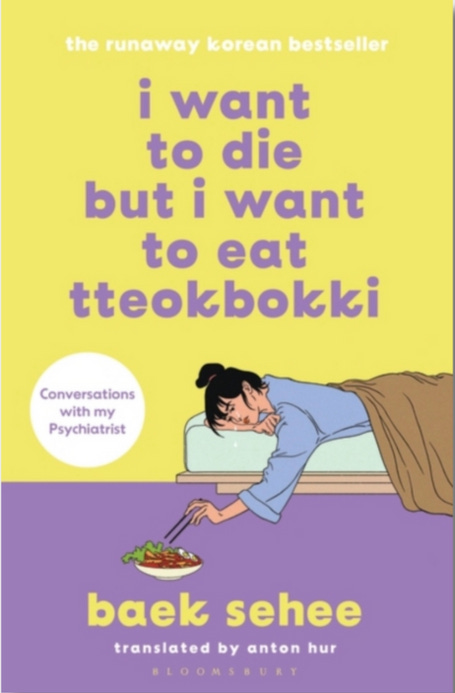
The therapy memoire turned international memoire “I want to die but I want to eat tteokbokki” now has a sequel (I want to die but I still want to eat tteokbokki (2024)). The South Korean author Baek Sehee shared recordings of her sessions with her psychiatrist as well as her personal reflections upon her mental health journey.
“PSYCHIATRIST: So how can I help you?
ME: I don't know, I'm – what's the word – depressed? Do I have to go into detail?”