


In this edition of our newsletter you’ll find:
🌱 Thoughts and reflections on moral ambition — An essay by noe Co-Founder, Mareike Peschau
💧 Join our upcoming noe circle season on Reigniting hope in the face of systemic collapse. For the first time ever, we are also offering a fellowship option!
🪴 Mobile application recommendations and reviews to support your attention and focus by our very own noe team.
Enjoy!
Your noe team
Did a friend forward you this email? Sign up to get your own copy of the noe newsletter to your inbox with inspiration, empathy knowledge, and community building.
Contribute! You would like to contribute to our community column, be featured by our noe stories, or join our next noe circle? Shoot us an email: contact@networkofempathy.org
🌱 Planting Seeds
In this section we share thoughts and concepts around empathy that have inspired us and made us think.
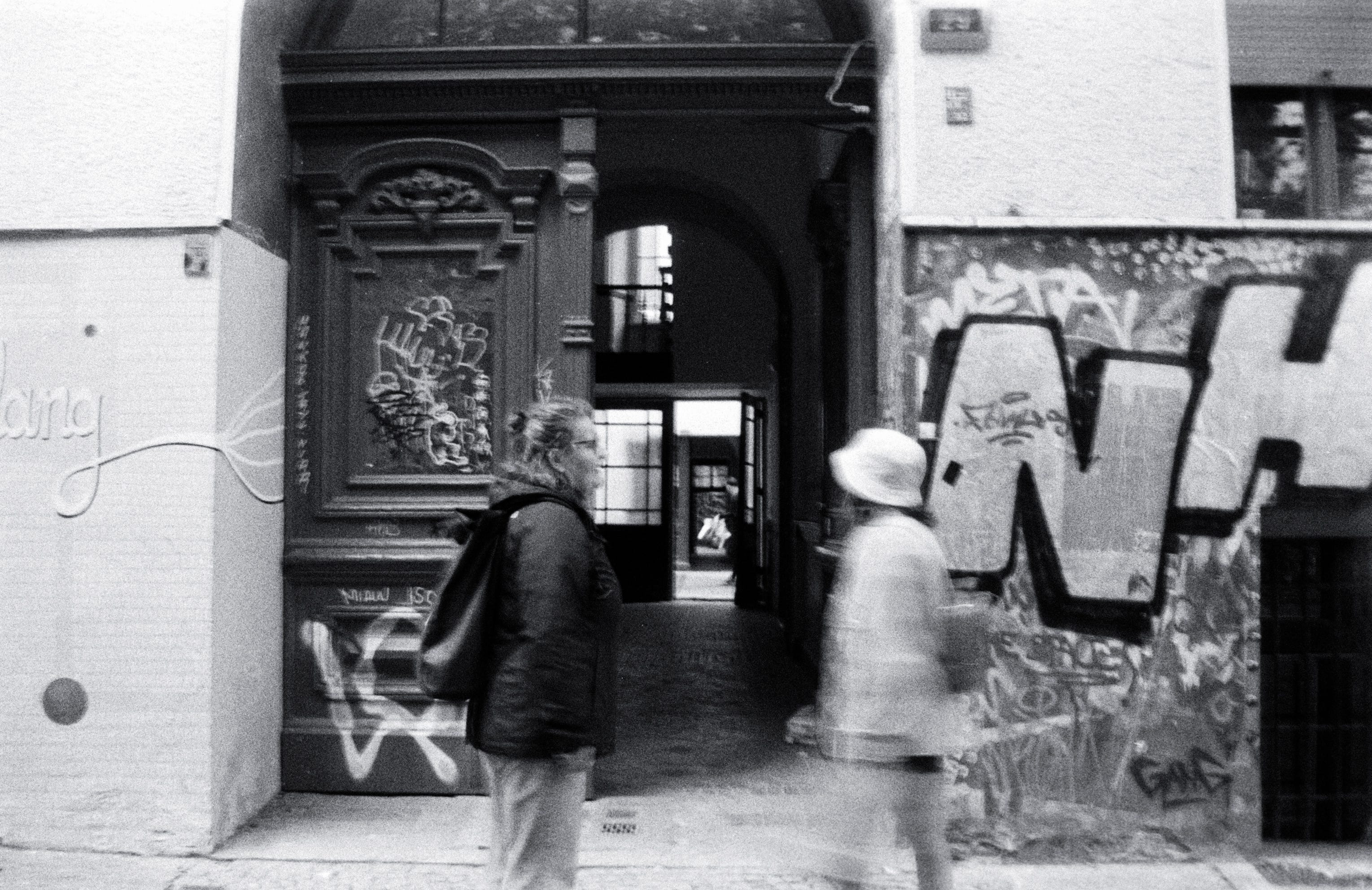
What does it mean to be morally ambitious?
By Mareike Peschau
In the past weeks, whenever I told friends about the book that I am currently reading they responded with: “Wait, me too!”. Seemingly as if the author managed to capture the feeling of a generation of young professionals: disillusioned by the job world and finding themselves in careers they had never imagined a couple of years ago. The subtitle “Stop Wasting Your Talent and Start Making a Difference” tells people to their faces what they have secretly been telling themselves.
“Moral Ambition” by Rutger Bregman proposes a simple idea. Ambitious people can be divided into two groups: those that are not idealistic and strive for conventional measures of success and those that are driven by idealism, striving to create change in the world. As Bregman makes clear, these latter ones are ultimately the superior group, driven by morality.
For many people with social science and humanities degrees from Western universities, Bergman’s proposition is compelling: We have all experienced the cognitive dissonance of entering and facing the reality of the job world. Suddenly being forced to perform in a system we have only just criticized for its deep flaws. Bregman is empowering us, insecure overachievers, by saying that rather than continuing in this internal struggle, it is ultimately better to seek out the opportunities for change that we once dreamed of in our classrooms. In fact, rather than attaining recognition by fulfilling societal expectations, enacting social change is what speaks of true excellence. In a way, the book therefore feels like a permission slip. Whispering: go out and do what you’ve meant to be doing all along.
Rather than reflecting on the concept of morality and the characteristics that make “moral ambition” actually moral, Bregman makes clear: moral ambition is striving for the biggest impact possible, without awareness or wokeness that slow down or even hinder change. The further you get into the book, the more it feels like the permission slip targets one group in particular: white men. Almost all examples he provides tell the story of men from Europe or the US. The leading story being that of Thomas Clarkson, a British abolitionist that helped achieve passage of the Slave Trade Act 1807, which ended British trade in slaves. It becomes clear that the aim of moral ambition is not to uproot systemic injustice and transform systems. The story is not about the people that were enslaved and achieved their liberation through their own agency. It is about the people that believe to have fixed it for them. Moral ambition thereby becomes something that those that benefit from the existing system do in order to fix issues that weigh heavy on their minds during Sunday church service without forcing them to give up part of their privileges. It is a way to uphold the status quo by making it more morally acceptable – to them.
Moral ambition, in Bregman’s sense, therefore seems to be led by cause and effect rather than systemic analysis. Millions of people die from Malaria each year? Let’s hand out mosquito nets! While on paper this seems like an effective impact, as less people die from Malaria for each dollar you spend, it does not consider that people may still end up dying from the effect free-of-cost malaria nets have had on the local economy (see Dead Aid by Dambisa Moyo). What about addressing the root causes, namely, lack of access to affordable healthcare? Now, this would make things messier and more complicated. Achieving impact might take longer, be less economically efficient, and the outcome more uncertain. But, it would ultimately be more sustainable and offer a holistic solution not only for Malaria. If we are truly ambitious, why shy away from this complexity?
As Bregman says, the multitude of pressing issues that we are facing, require the most driven and ambitious young people to take action. However, this should mean not only being ambitious about the impact we create, but also about the way we do it and the solutions that we propose. Empathy is a powerful initiator for change, like Bregman also states. It makes us deeply resonate with a cause and leads us to take action. However, it should not stop there. Through empathy we can actually see the issue we are trying to address and connect to the people enduring its impacts, identify the knowledge that is there, and support solutions and engage in dialogue led and developed by communities. It can also invite us to practice self-compassion. Because, more often than not, ‘change’ work will make us feel uneasy rather than good about ourselves. As we constantly reassess our positioning and actions, this might be where true moral ambition grows.
So let us strive for this other kind of moral ambition. The one ambitious enough not to fix but to transform systems. The one that acknowledges that truth sometimes lies beyond what can be expressed in data points, that is rooted in lived experience and different ways of knowing. A moral ambition driven by collective action and care – for each other, our communities and our earth. Rooted in empathy.
Stay tuned as Network of Empathy explores alternative systems in its coming issues.
💧 Watering the Mind
In this section we share updates from the noe team and concrete offers that allow you to build emotional intelligence and resilience skills.
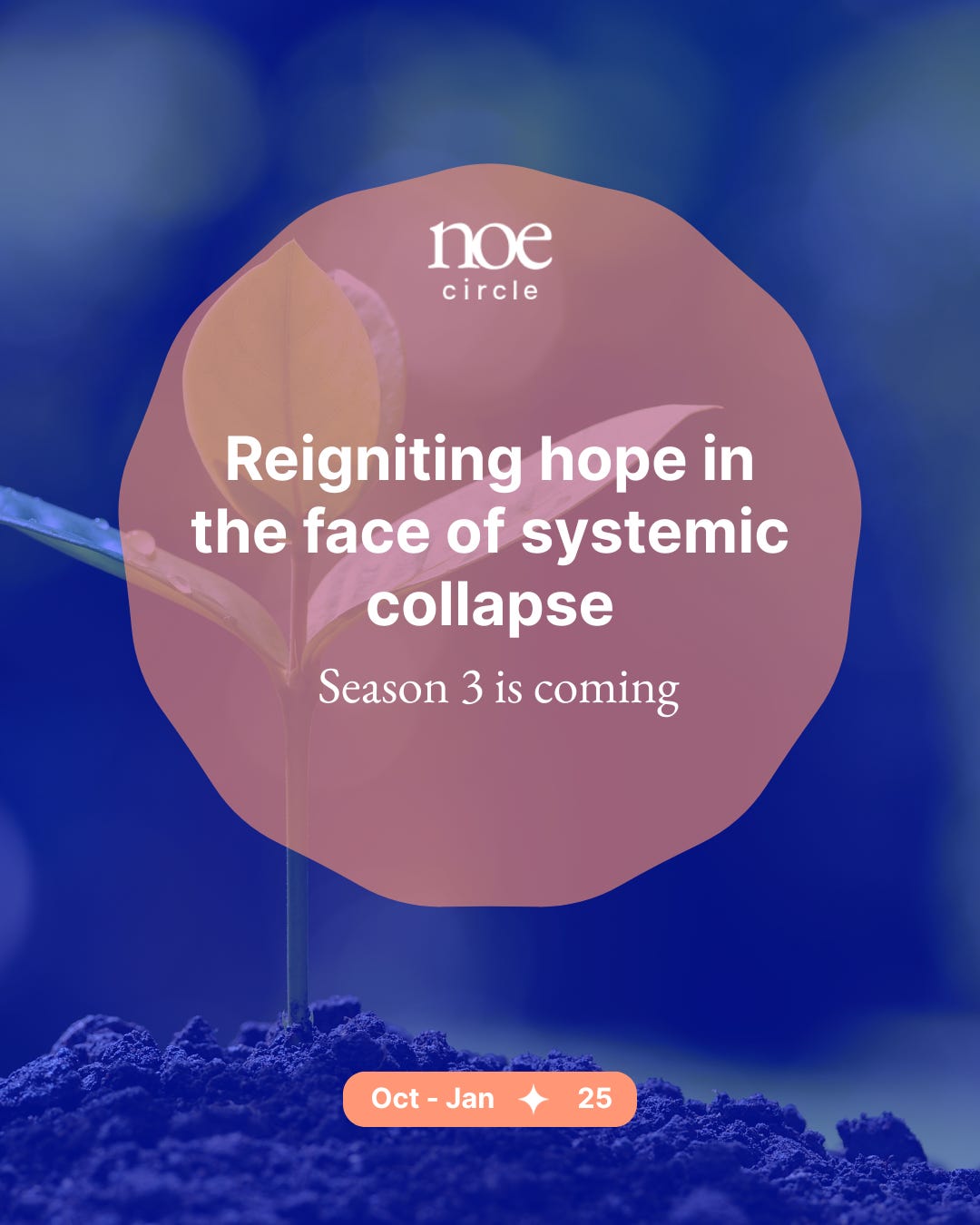
“Active hope is something we do, not something we have.” - Joanna Macy
Reigniting hope in the face of systemic collapse
If you’ve been working for change - or even just paying attention to the state of the world - you might feel it in your bones: the exhaustion, the frustration, the quiet hopelessness that creeps in. The thought that things might not change - the climate crisis not properly addressed, violence not stopped, systemic injustices, like the patriarchy, persist. It’s a lot to carry, especially when you’re pouring energy into trying to make a difference.
Hope isn’t something we “have” in endless supply. Rather, it is a practice that we turn to, when things get difficult. Our upcoming season of noe circles, inspired by Joanna Macy’s work on Active Hope, is therefore about developing a practice of hope. We do so by reconnecting with our values, the causes we are passionate about and by grounding ourselves in community. All based on the understanding that long-term change only happens when we care for ourselves and each other along the way.
Across a series of 4 noe circles, every first Saturday of a month at 11am CET, embedded in a fellowship option, we explore Active Hope as a practice:
Circle 1: Facing reality with honesty (4.10.2025, 11am CET)
Circle 2: Reconnecting to what we value and long for (1.11.2025, 11am CET)
Circle 3: Taking meaningful steps forward (6.12.2025, 11am CET)
Circle 4: Rooting ourselves in community (03.1.2025, 11am CET)
Ways to join:
This season we offer you two different ways of joining - by introducing, for the very first time, the noe fellowship!
noe circle Fellowship
You want to become part of a community of care that supports you in the long-term and develop your own practice of hope? For those wanting deeper engagement, we have created a noe circle fellowship programme, with additional workshops and community check-ins during which we will dive deeper into the topics explored during the noe circles. Among others, we will develop your value compass, build your personal resources to sustain long-term change-work, and foster a community of care.
The programme includes:
Priority access to all 4 circles in the season
5 additional community check-ins and workshops between sessions
A reflection workbook to deepen your learning
A small, supportive peer network for ongoing exchange
Opportunities to collaborate and stay connected after the season ends
Why join:
Feel less alone in your struggles as a changemaker
Rediscover hope and clarity in uncertain times
Connect with a diverse network of peers who “get it”
Gain tools, perspectives, and inner resources to sustain your work long-term
Individual Circles
Drop in for the sessions that interest you most. In each circle, you’ll hear from inspiring guest speakers—activists, artists, and changemakers—who will share their own stories of resilience and transformation, followed by space for reflection, dialogue, and connection. Get inspired, share, and connect with peers from across the world.
Why join:
Experience meaningful connection without the pressure of a bigger commitment
Recharge on energy, hope, and calm your nervous system
Get inspired by changemakers who share their challenges and resilience
Feel connected in a space where people truly relate to the struggles you are going through
*All our offers are accessible free of charge. However, we ask you for a small donation to cover our operational cost. The recommended donation for participating in a circle is therefore 5 EUR and for participating in the fellowship it is 50 EUR.
If you would want to join our community or support us, don’t hesitate to get in touch at contact@networkofempathy.org.
🪴 Vines of Community
In this space we foster connection and inspiration by sharing stories, poems, and thoughts of community members.
In the face of the widespread attention crisis we are all experiencing, from the heart of our team, this August we present to you, app recommendations and reviews that help support your focus by gamifying attention. We hope you enjoy!
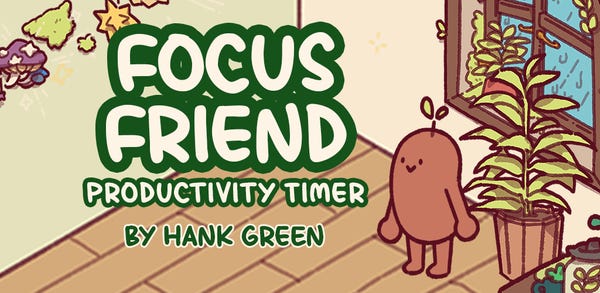
Gentle Tech: Two Apps That Honor Your Humanity
A suggestion for those seeking compassionate ways to support daily wellbeing
Finch: Your Pocket Companion for Small Victories
I’ve been using Finch with friends for over two months now, and it’s become a quiet marvel in my daily routine. This app transforms mundane tasks into moments of connection through the care of a virtual bird companion—think tamagotchi meets mindful productivity.
What makes Finch special isn’t the task tracking itself, but how it reframes our relationship with daily functioning. Simple actions like “drink water” or “open curtains” become small celebrations rather than obligations. For those of us navigating depression, anxiety, or simply the weight of feeling “unproductive,” these micro-achievements offer gentle dopamine rewards that whisper: “Hey, you’re doing something meaningful. Go you!”
A thoughtful note: If you tend toward obsessive patterns, approach with awareness—the reward system could become compulsive rather than supportive.

Focus Apps: Reclaiming Presence in a Distracted World
The second app I’m exploring uses similar companion-based motivation to help with focused work. By blocking distractions and gamifying concentration, it offers a bridge back to sustained attention.
In our age of endless notifications and fractured focus, tools like this aren’t about becoming more productive machines—they’re about returning to ourselves as human beings who can be present with what matters.
The Deeper Invitation
These apps work because they understand something profound: we thrive with gentle accountability, celebration of small steps, and companions (even digital ones) who witness our efforts. They remind us that productivity culture doesn’t have to mean self-punishment—it can mean self-care.
Perhaps the real innovation here isn’t the technology, but the compassion embedded in how we relate to our daily lives.
What gentle tools or practices help you honor your humanity while navigating daily tasks?
If you would want to join our community or share your work (art, photography, writing, or thoughts—any form of self-expression!), don’t hesitate to get in touch at contact@networkofempathy.org.