

In this edition of our newsletter you’ll find:
🌱 Why and how collective care is an essential feminist practice for our collective liberation?
💧 From Bonn and Brussels to our upcoming noe circle today at 2 pm CET/7 pm Jakarta, Reconnecting to Empathy: How Indonesian Youth are Strengthening Democracy through Dialogue. We have been cooking!
🪴 A couple of great suggestions for you from our noe team.
Enjoy!
Your noe team
Did a friend forward you this email? Sign up to get your own copy of the noe newsletter to your inbox with inspiration, empathy knowledge, and community building.
Contribute! You would like to contribute to our community column, be featured by our noe stories, or join our next noe circle? Shoot us an email: contact@networkofempathy.org
🌱 Planting Seeds
In this section we share thoughts and concepts around empathy that have inspired us and made us think.
What if Care Wasn’t “Nice” but Radical? Feminist reflections by Mareike Peschau and Nada Elbohi
The Trap of “Wellbeing” Under Capitalism
For the past five years, I (Nada) have personally struggled with the concept of self-care. I believe is central to healing and wellbeing, however, this perception was distorted by the influence of social media and the wellness fad. For the past few years, I realize now, that I have idealized and thrived for those viral wellness routines. I felt bad, comparing my messy attempts at self-care and healing to the well-structured routines of influencers. I wondered, if they could do it, why couldn’t I? So my goals included waking up at 6 am, journaling, meditating, and doing yoga every day. In reality, care in all its forms are organic, non-linear, and imperfect processes and cycles that don’t happen in a vacuum and don’t require a rigid schedule or a long list of monthly consumables.
Growing up with the influence of individualistic culture in a larger background of collectivism, only with age did I begin to appreciate and value collectivism, community, and collective care. The balance between self and collective care is crucial. Self-care enables collective care, and each reinforces the other.
Why Collective Care?
The current neoliberal capitalist system thrives under isolation—a necessary weapon of consumerism, division, and disenchantment. In isolation, it is more difficult to recognize the interconnectedness of our struggles. We are left to believe our issues are individual, not systemic and structural. Under this system, care and wellbeing have been reduced to consumable commodities as well as a hyper-individualistic process. However, isolation constricts our ability to imagine other possibilities, alternatives—and we are resigned to the limits of the status quo and lose hope in possibility and change.
Under a patriarchal system that has been intentionally designed to extract, exploit, and commodify, community and care are the antidote. Collective care is a survival strategy and a political foundation for our collective liberation. We must recognize that our wellbeing is intrinsically linked to the wellbeing of others.
Care is not an add-on; it is the infrastructure that sustains life—physical, social, structural, and systemic. Care can no longer be undervalued and exploited.
Care is Not “Nice”—It’s Radical
Society frames care as soft, emotional, and secondary—especially when done by women, gender-diverse persons, and marginalized people. Feminist thinkers reclaim care as radical political action:
Caring for myself is not self-indulgence, it is self-preservation – and that is an act of political warfare. — Audre Lorde
Love and care are central to building just, transformative communities. — Bell Hooks
Care is “everything we do to maintain, continue, and repair our world so that we can live in it as well as possible.” — Joan Tronto
Collective Care as Feminist and Decolonial Strategy
Collective care is a counter-practice to self-exploitation and isolation. It sustains social movements by resisting burnout and valuing rest, support, and slowness. Care is not auxiliary—it is protection, resistance, and survival. Collective care provides the opportunity to build another world: a world that sustains life, the environment, and our wellbeing.
Feminist and decolonial care practices center:
Justice, not productivity
Community, not individual competition
Support, especially for those most abandoned by dominant systems
Acts of Care, An Everyday Practice
Collective care is both political and practical. Acts of care can look like:
Mutual aid
Checking in on friends
Redistributing resources
Making space for grief, rest, and joy
Care is a strategy. It is how we organize, resist, and imagine new worlds.
Stay tuned as Network of Empathy explores alternative systems in its coming issues.
💧 Watering the Mind
In this section we share updates from the noe team and concrete offers that allow you to build emotional intelligence and resilience skills.
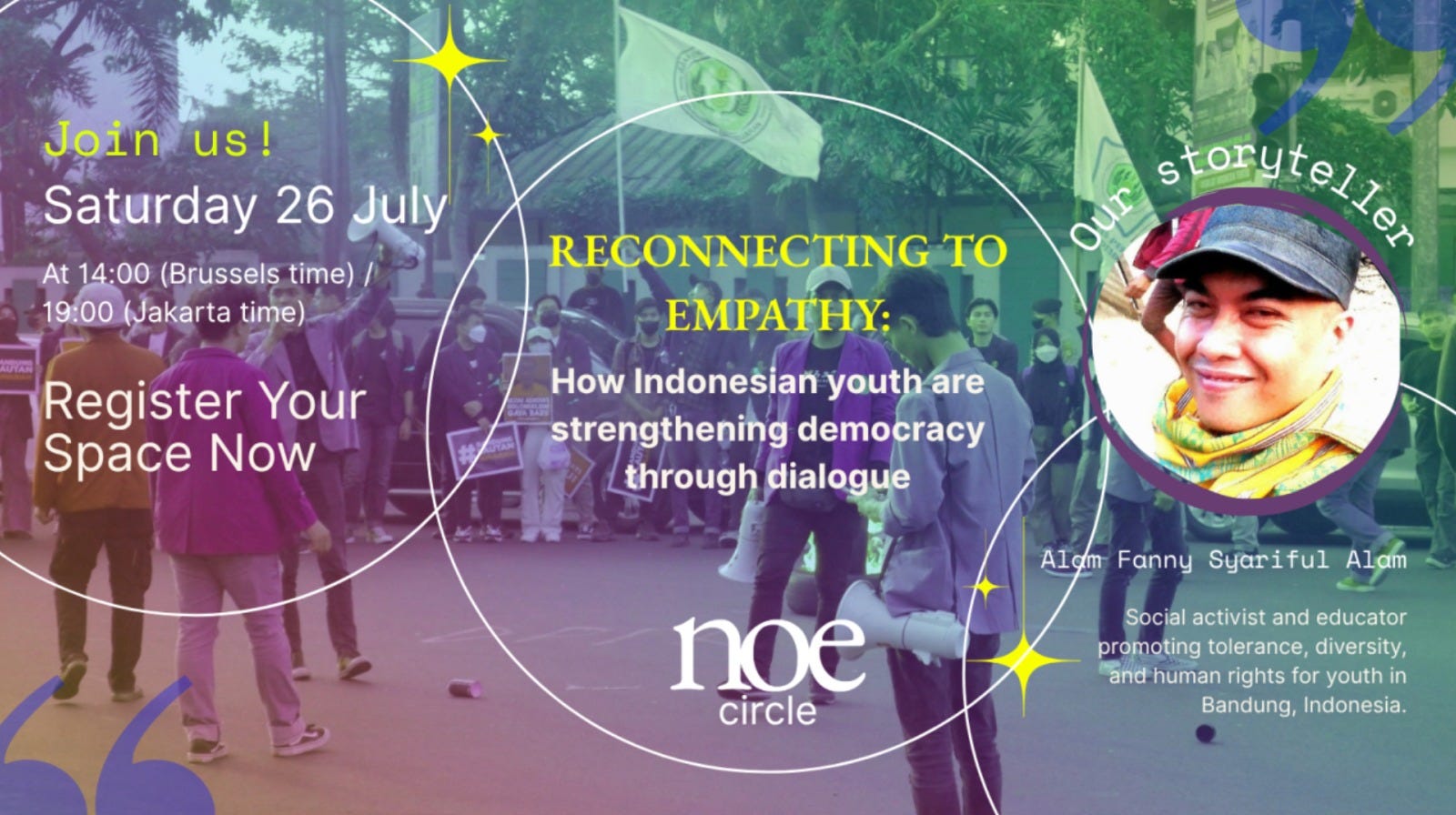
Join our noe Circle online today, Saturday July 26, 2pm CET/7 pm Jakarta—a community discussion for radical empathy, open-hearted dialogue, and realignment for our collective liberation.
We're exploring how Indonesian youth are creating safe spaces to talk about politics, gender, and conflict - even when it feels risky to speak up.
Featuring Fanny, a social activist who runs weekly dialogue sessions with young people in Indonesia. The big question: how do we protect empathy when misinformation and hate speech are everywhere? Could be really relevant for anyone dealing with:
Difficult conversations at work/home
Youth engagement/education
Cross-cultural communication
Just wanting to connect with people doing meaningful work globally
Register here on this link!
A Workshop on Collective Care at Bonn Climate Camp
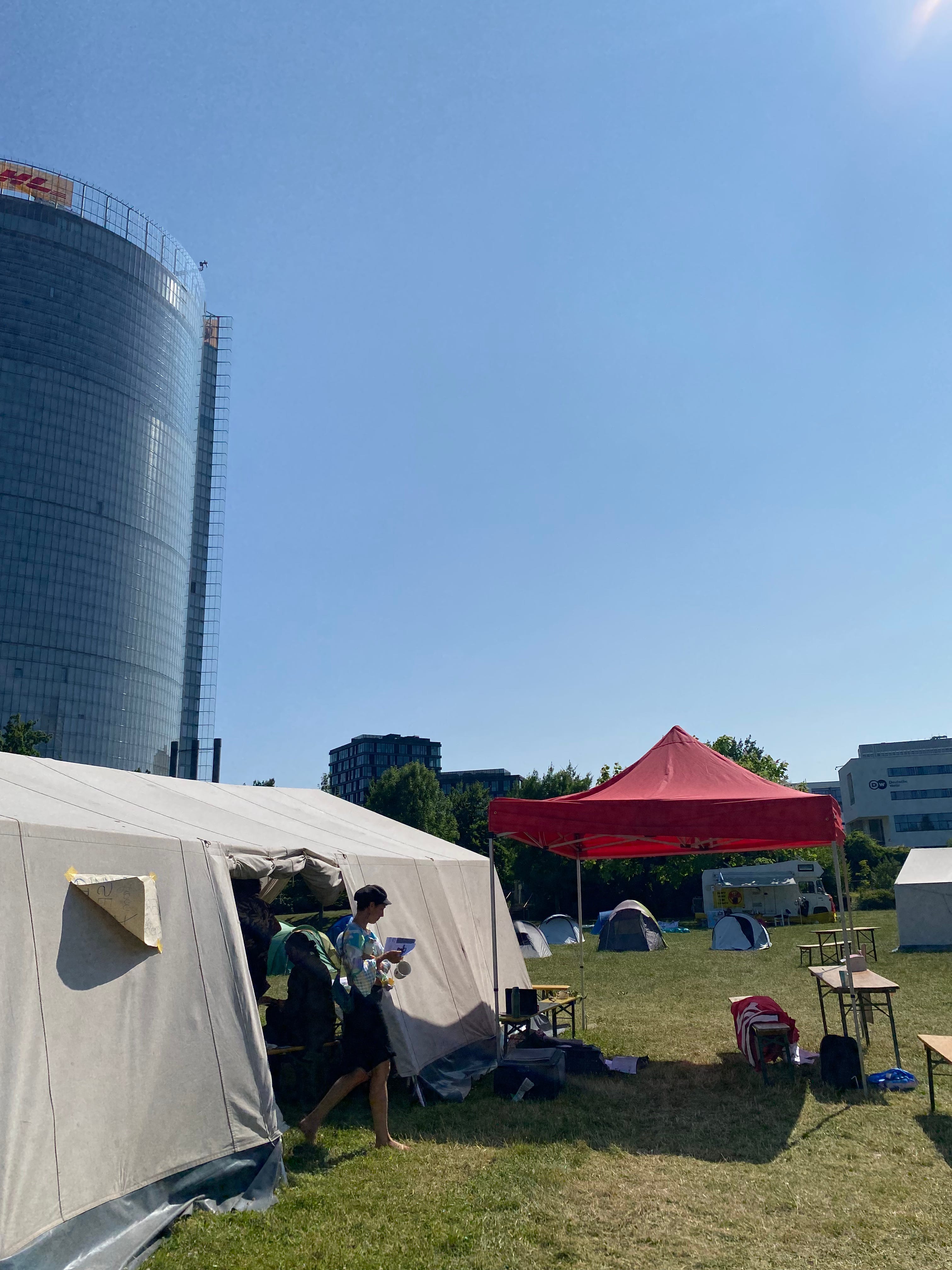
A green meadow by the river Rhine - slowly turning brown in the summer heat. Behind it, the UN tower is glaring in the sun creating a stark contrast to the deep blue sky. Somewhere in the distance, campers have set up their RVs enjoying their summer break. Not far from them, a series of tents has been set up with signs like “workshop tent 1” or “kitchen tent” standing in front of them.
On the outside everything seems calm, really, it’s too hot to be outside on the grass. From time to time people that are dressed far too formal to be enjoying the sun pass by. As soon as you poke your head into one of the tents, you can overhear heated discussions on climate justice.
Welcome to Bonn Climate Camp. A space for civil society to reunite, just outside of the UNFCCC climate negotiations. It is here that in the end of June we hosted a noe workshop on collective care. These conferences can be an intense experience, from the overwhelming experience - from being in a new space, maybe a different country, together with thousands of other people to having to fight for your rights, stand up to injustice and face existential questions.
That’s why we offered a space for processing and sharing. Where community can be felt, in a space that often feels isolating. In a small group we shared the grief, the anger, the fear - and all the other heavy emotions that we carried - and developed strategies for how we can make each other feel supported going forward.
The key insight: sometimes it just takes a sincere “how are you holding up?” or offering a cup of coffee to build connection and make each other feel cared for.
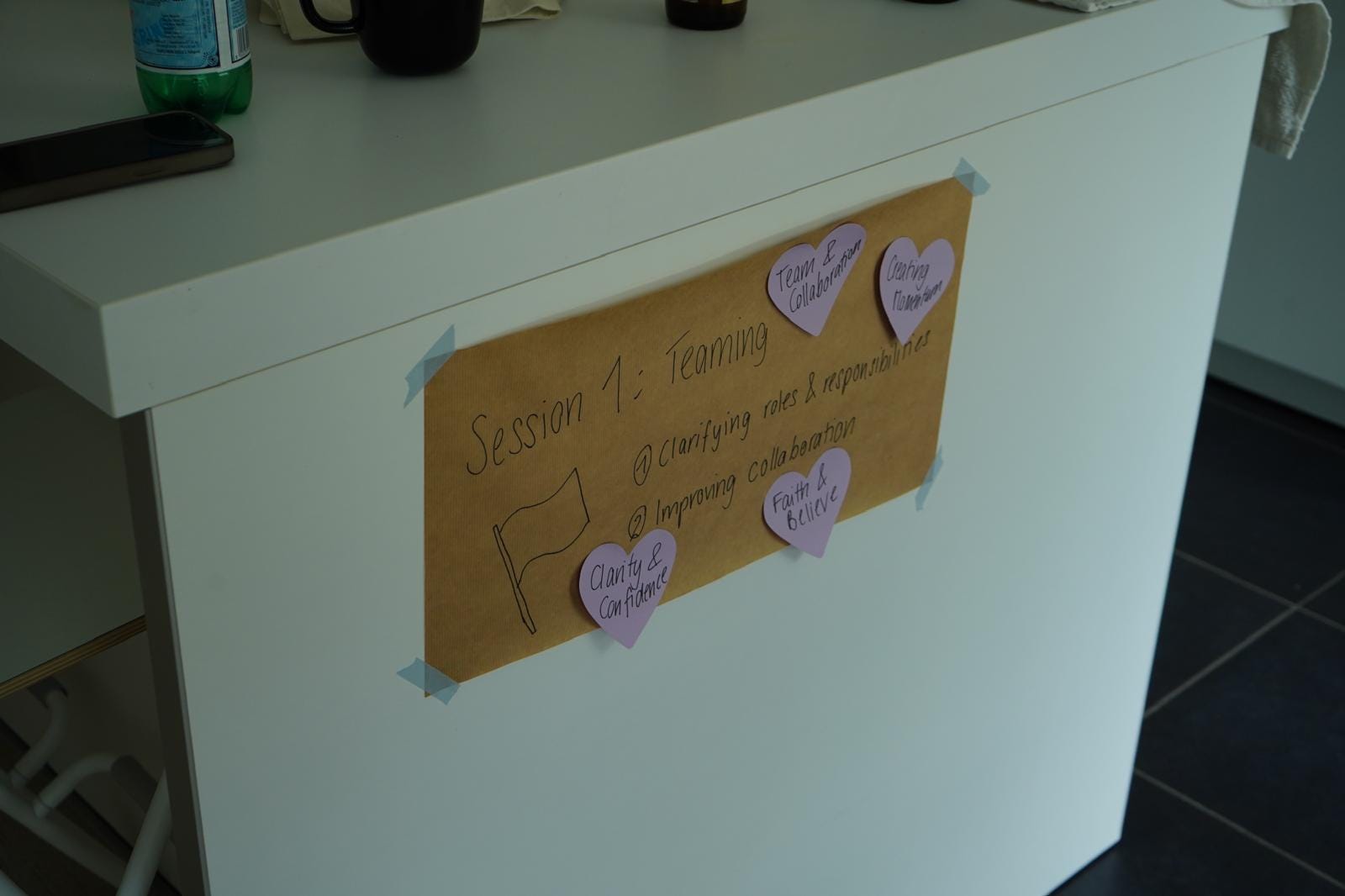
noe Strategy Meeting in Brussels
Since September 2020, our team of three, Mareike, Nada, and I (Rimma), had gotten pretty good at the whole remote work thing. We were spread across the Eastern hemisphere, juggling time zones and living our professional lives through video calls. Like everyone else in the post-COVID world, we'd adapted.
But then came June 2024 and the noe Experience in Brandenburg. While some of us had met in person before, this was the first time all three of us were finally in the same place together. And honestly? It was just better. There's something about being able to grab a coffee together or step outside for a quick break that you can't replicate over Zoom. The conversations flowed differently, ideas bounced around more naturally, and we actually had fun working together.
That experience made us realize we'd been missing out. So we decided to prioritize meeting in person whenever we could make it work.
Which brings us to late June this year. Veronica, who joined our team in April, invited us to her place in Brussels for a proper strategy session. Over two focused days, our now-team-of-four hammered out our direction for 2025-2026.
It wasn't just about the work, though that was productive. Veronica cooked us incredible Indonesian food, and we found ourselves practicing communal care with one another in ways that felt so good and natural. There's something about actually feeling each other's presence in the same space: we could sense when someone needed a break, offer support without having to ask, just be there for each other. Even though some of us didn't know each other that well yet, we genuinely cared for one another. We shared meals, dreamed up plans for the future with genuine excitement, and remembered why we enjoy this work together.
What came out of it? A programme that actually has us excited to get to work. We're still fleshing out the details, but you can feel the difference – this isn't something we cobbled together over video calls. It has weight to it.
Please stay tuned for what's coming next.
Sometimes the simplest things – like being in the same physical space – make all the difference.
If you are working in an activist space or wish for more collective care in your community or team, do not hesitate to reach out to us: contact@networkofempathy.org
If you would want to join our community or support us, don’t hesitate to get in touch at contact@networkofempathy.org.
🪴 Vines of Community
In this space we foster connection and inspiration by sharing stories, poems, and thoughts of community members.
For July, we have a great show recommendation and review for you from our Co-Founder, Rimma!
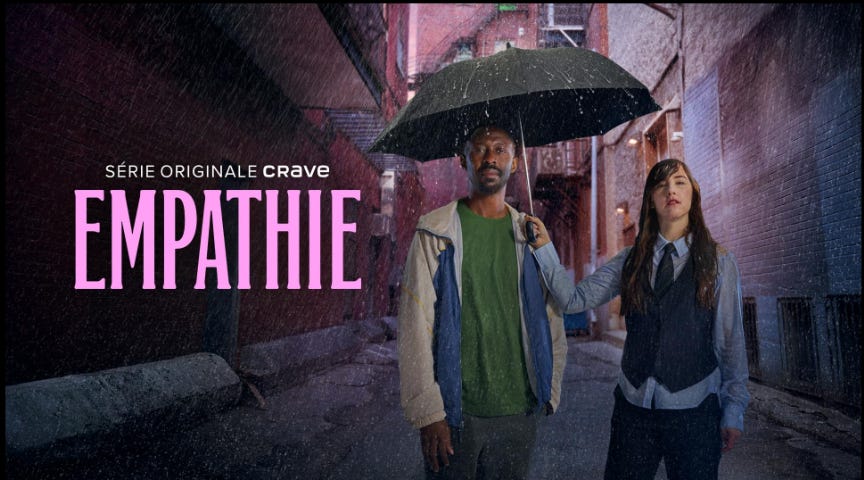
First and foremost, I’ve watched a Canadian series called Empathie, which came out this April. When I came across this series, I was obviously drawn to it by its name, but what made it truly stand out was how deeply human it is. The series follows criminologist-turned-psychiatrist Suzanne who starts to work at the Institut Psychiatrique Mont-Royal. It is a tale both heartwrenching and heartwarming, as Suzanne navigates the tough work of a mental health professional in a hospital wing dedicated to criminals while herself working through her own grief.
What sets Empathie apart is its commitment to seeing the human behind both the good and the bad—the trauma people have been through and the trauma they've caused others. It's about being patient with healing and recognizing the humanity in ourselves and others, no matter how difficult that recognition might be.
The series handles the intersection of criminology and mental health in the most wonderful way, refusing to turn mentally ill criminals into one-dimensional monster-like figures. Instead, it takes the time to explain and show how and why these individuals ended up where they are. By humanizing them, the show allows us to empathize with people we might otherwise dismiss or fear. It is important to note that the show isn’t trying to find excuses for harmful behavior, but rather creates an opportunity for understanding the complex web of circumstances, trauma, and illness that shapes human actions.
Suzanne's own journey mirrors this theme beautifully. The main character is only able to deal with her personal struggles once she realizes and recognizes that she needs help from others and for that she needs to be open and vulnerable about what she is going through. Her professional expertise can’t shield her from the universal human challenge of asking for help and allowing others to fully see us for where we are and care for us nevertheless.
The series reminds us that healing (whether for ourselves or others) requires patience, compassion, and the courage to remain open to the full complexity of human experience.
If you would want to join our community or share your work (art, photography, writing, or thoughts—any form of self-expression!), don’t hesitate to get in touch at contact@networkofempathy.org.