

In this edition of our newsletter you’ll find:
🌱 Reflections from Rabat: Feminist Solidarity at the Crossroads by Nada Elbohi
💧 Find out what the noe team has been up to!
🪴 Food for thought from MENA feminists and recommendations on exploring alternative systems.
Enjoy!
Your noe team
Did a friend forward you this email? Sign up to get your own copy of the noe newsletter to your inbox with inspiration, empathy knowledge, and community building.
Contribute! You would like to contribute to our community column, be featured by our noe stories, or join our next noe circle? Shoot us an email: contact@networkofempathy.org
🌱 Planting Seeds
In this section we share thoughts and concepts around empathy that have inspired us and made us think.
Reflections from Rabat: Feminist Solidarity at the Crossroads by Nada Elbohi
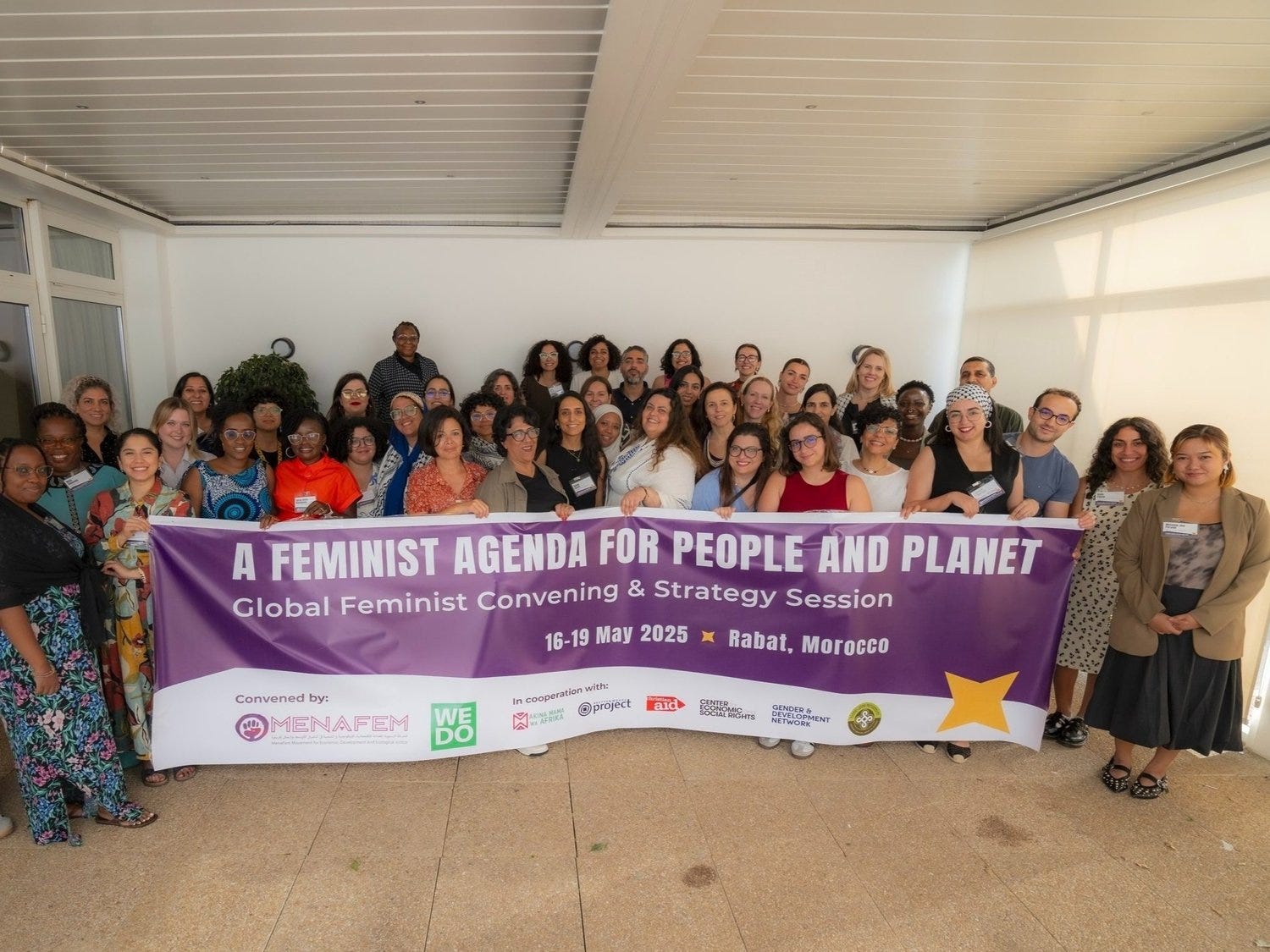
Last week, Network of Empathy’s Nada Elbohi spent two days in Rabat, Morocco, unpacking, strategizing, and contemplating what a new world—a just world—means to feminists from across the Middle East and North Africa, and beyond.
This crucial two-day meeting served as a safe space for critical, nuanced reflections, pressing questions, and necessary confrontations. We are at a turning point—a crossroads: the façade is disintegrating. The systems created to support democracy, human rights, justice, and equity are the same systems giving rise to the far-right and anti-rights movements. We are not surprised.
After hours of discussions, we asked ourselves: Who is in the room? And for what purpose?
International institutions have shown that they serve not to promote collaboration, peace, and equality, but to act as tools to discipline the Global South, weapons of imperial capitalism. Obey, or else. Liberalize your markets, or else. Freedom and life for us—and not for you. Human rights and justice matter, depending on who you are. Stand up to the exploitation, and you will be targeted and replaced.
What we see in Gaza is the rehearsal of the future.
— Gustavo Petro, Columbian President
We are left to ask ourselves not if we are next, but when? If Israel can burn and plunder for years on end without barely a slap on the wrist, whose do these systems serve?
What does justice —climate or otherwise— mean with innocent blood on our lands? What does “development” even mean under colonization and imperialism?
The Violence Beneath Neoliberalism
Reflecting on the MENA region, as an Egyptian woman, we are reminded of the war and violence at the heart of the neoliberal, capitalist model. Neutrality and impartiality are façades of enablement and perpetuation. Human rights are inherently political. Feminism is political. Extractive militarism and economic violence are the tools of neoliberalism and capitalism, and its institutions are its instruments.
Neoliberalism and capitalism are now facing the consequences of their own creation, as the far-right and anti-rights movement rise. As we reckon with this moment, we must ask not only how to move forward—but what divides us now and how can we unite.
Looking at the history of development “cooperation”, the export and spread of this neoliberal concept through foreign policy began after World War II. Development became a global concern, a security concern. Once again, poor states are reduced to dangerous places suffering from problems the world says they brought on themselves, framing these countries as “problems” to be managed, controlled, saved. When development becomes a matter of security, what does this view allow and support? Domination, intentional disablement, and exploitation behind the mask of white supremacy and white saviorism. In the guise of the pursuit of peace and liberty, formal colonialism gave way to imperial capitalism.
Why reform systems built to subjugate and exploit? It’s time to throw them out the damn window.
The MENA region is at the heart of the imperial project.
— Emilia Reyes, Equidad De Género
Who Defines Development?
A new world needs a new system and reinvigorated values. This requires dismantling power structures and unbalanced power relations. Power at the core of the imperial project and global hegemony, I reflect, comes in two primary forms: wealth and epistemology. The wealth and knowledge accumulated in the Global North were built off the labor, time, and bodies of the Global South—from the slave trade to oil and critical mineral extraction.
The conception of development solely through economics is part of this epistemological hegemony, or dominion over knowledge. However, there are many alternatives—such as the capabilities approach to development, degrowth, solidarity economies, and more.
We must get to the root of the issue, the ideas and beliefs that have spread through culture, values, and norms. Beliefs in endless economic growth, on both personal and national levels, are at the foundation of the capitalist, neoliberal model. These ideas have been used to undermine and replace traditional values, including collective values found across the MENA region and the Global South.
Who Benefits from Knowledge?
While knowledge may not be the first thing that comes to mind when we think of power, the truth is: wealth means nothing without technical skill, knowledge, and innovation. At the moment, the Global North holds a strong monopoly over how knowledge is produced and shared. The neoliberal model, capitalism, and the dominant understanding of “development” come from the Global North—particularly from institutions with perceived authority. The research that informs and shapes policy more often than not comes from the Global North. The data used for decisions is collected by organizations such as the OECD and the UN. This is part and parcel of a system that perpetuates biased knowledge, produced by those who benefit from structures that reproduce injustice, inequality, and dependency.
Inequality extends beyond the tangible and material; it also includes perception, ideas, and narratives. When knowledge from the Global South is perceived as inferior or illegitimate, then our voices, perspectives, and experiences are pushed aside and intentionally ignored.
Looking Ahead: Dismantling and Reimagining
The foundation must be values that center justice, equity, decoloniality, individual and collective wellbeing, and community.
The questions lull in our minds: What comes next? What do we do? How can we materialize this solidarity?
While the world tells us there are no other options, it’s up to us to create an alternative that serves us—our wellbeing. It is not about giving up, but about hiking up our boots, linking arms, asking the difficult questions, and taking the necessary steps.
Stay tuned as Network of Empathy explores alternative systems in its coming issues.
💧 Watering the Mind
In this section we share updates from the noe team and concrete offers that allow you to build emotional intelligence and resilience skills.
What has the Network of Empathy team been up to?
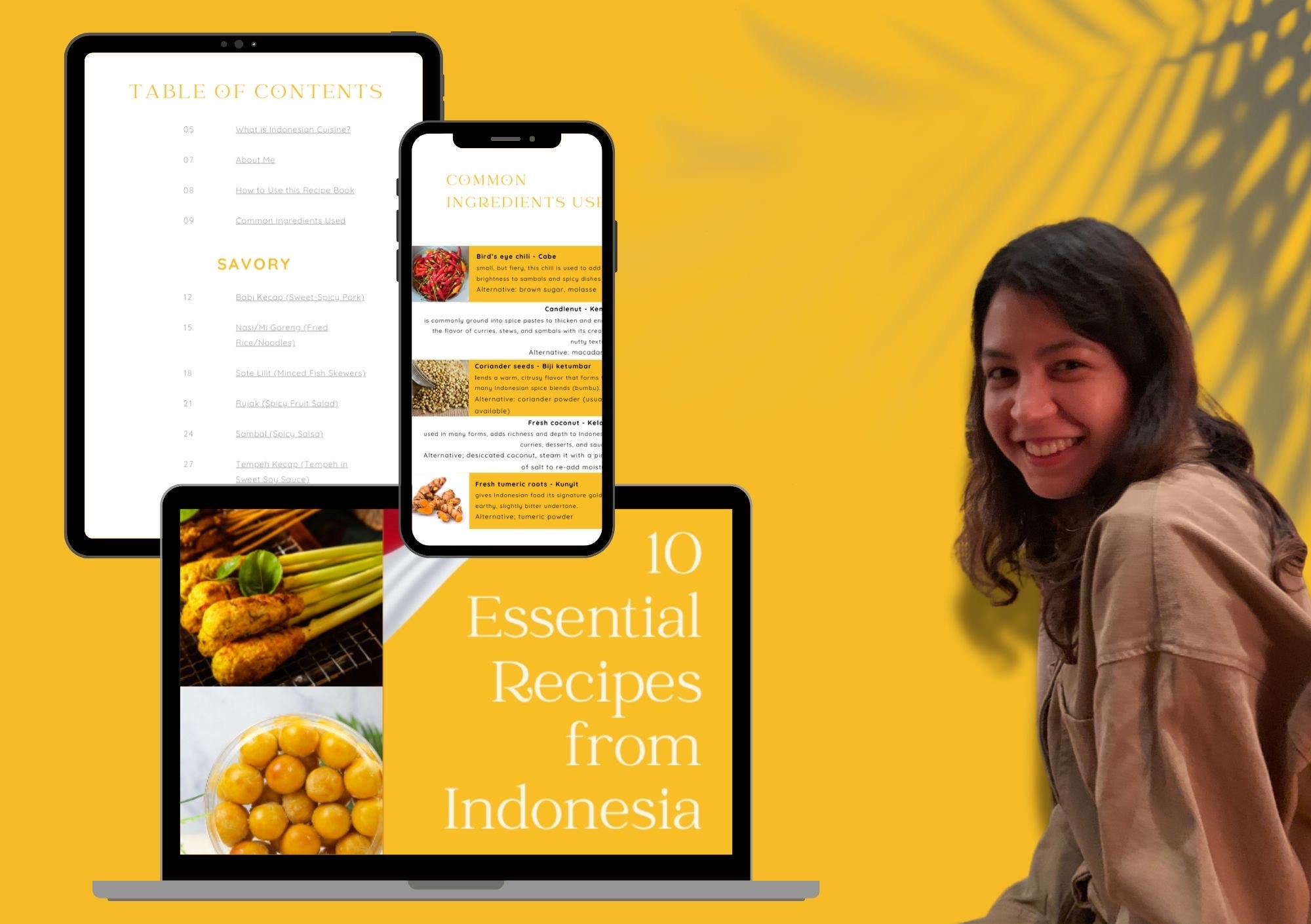
Veronica, our Comms Wiz... and Chef!
One of my personal hobbies is cooking. These months and days, I have been exploring the Indonesian side of my heritage, cooking favorite dishes from my childhood. Indonesian cuisine is very complex, usually requiring lots of spices and elaborate cooking methods. Since living in Europe however, I tried to come up with ways of recreating Indonesian dishes that are more simplified and use ingredients that can be found outside of Indonesia but still reflect the authentic flavor of the country. As a result, I wrote my very first recipe book and you can get a copy here.
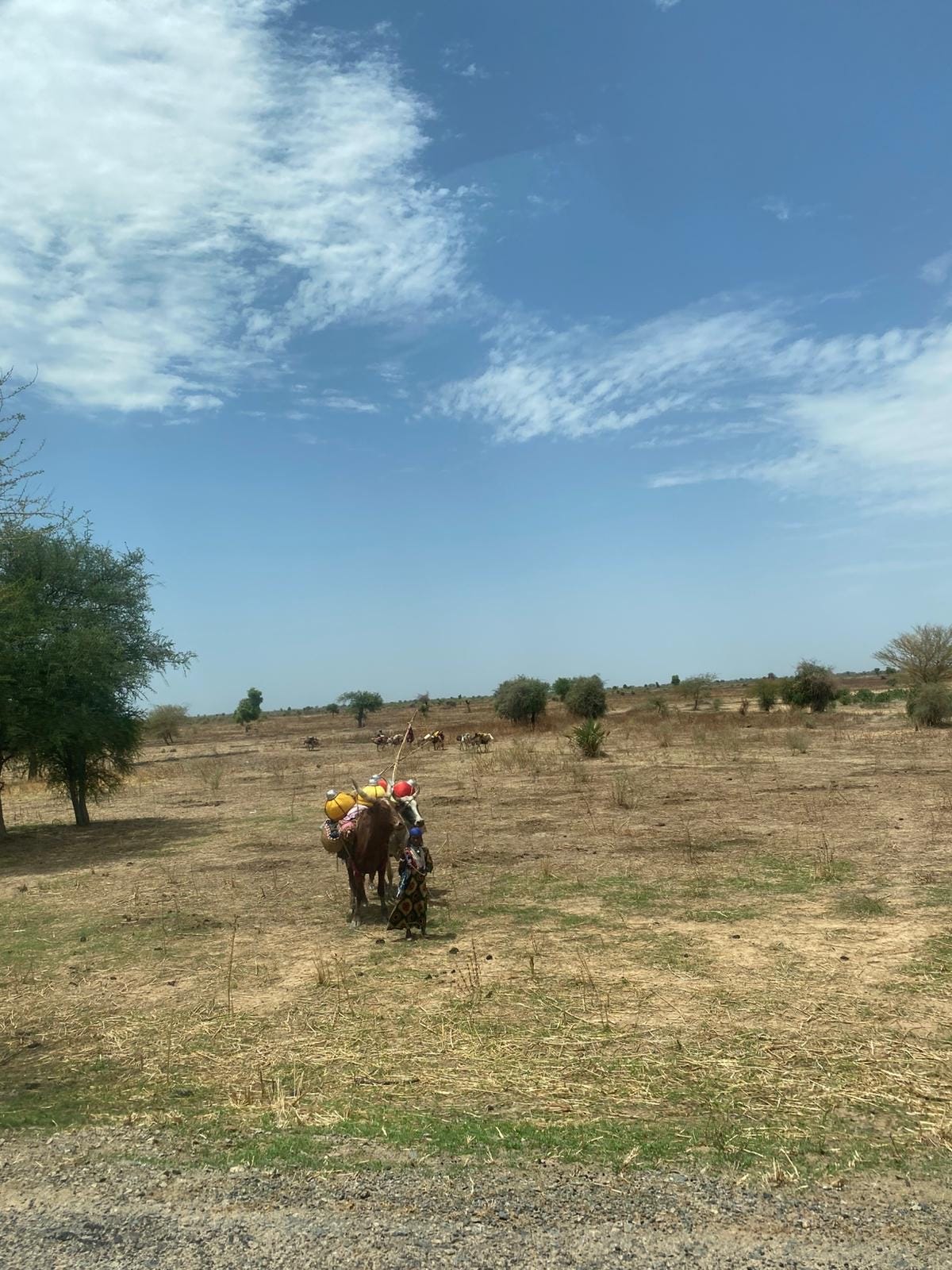
Mareike, our Master of Order... and Exploration!
I went on my first mission outside of N’Djamena! Seeing the landscape change from the white sands of the Sahel to the rich red earth of Sub-Saharan Africa was incredible. I also witnessed transhumance communities on the move - like this girl on the photo. I only just worked with a project on peaceful transhumance learning about the challenges of modern day nomads and their host communities around the lake Chad basin which made this encounter even more special.
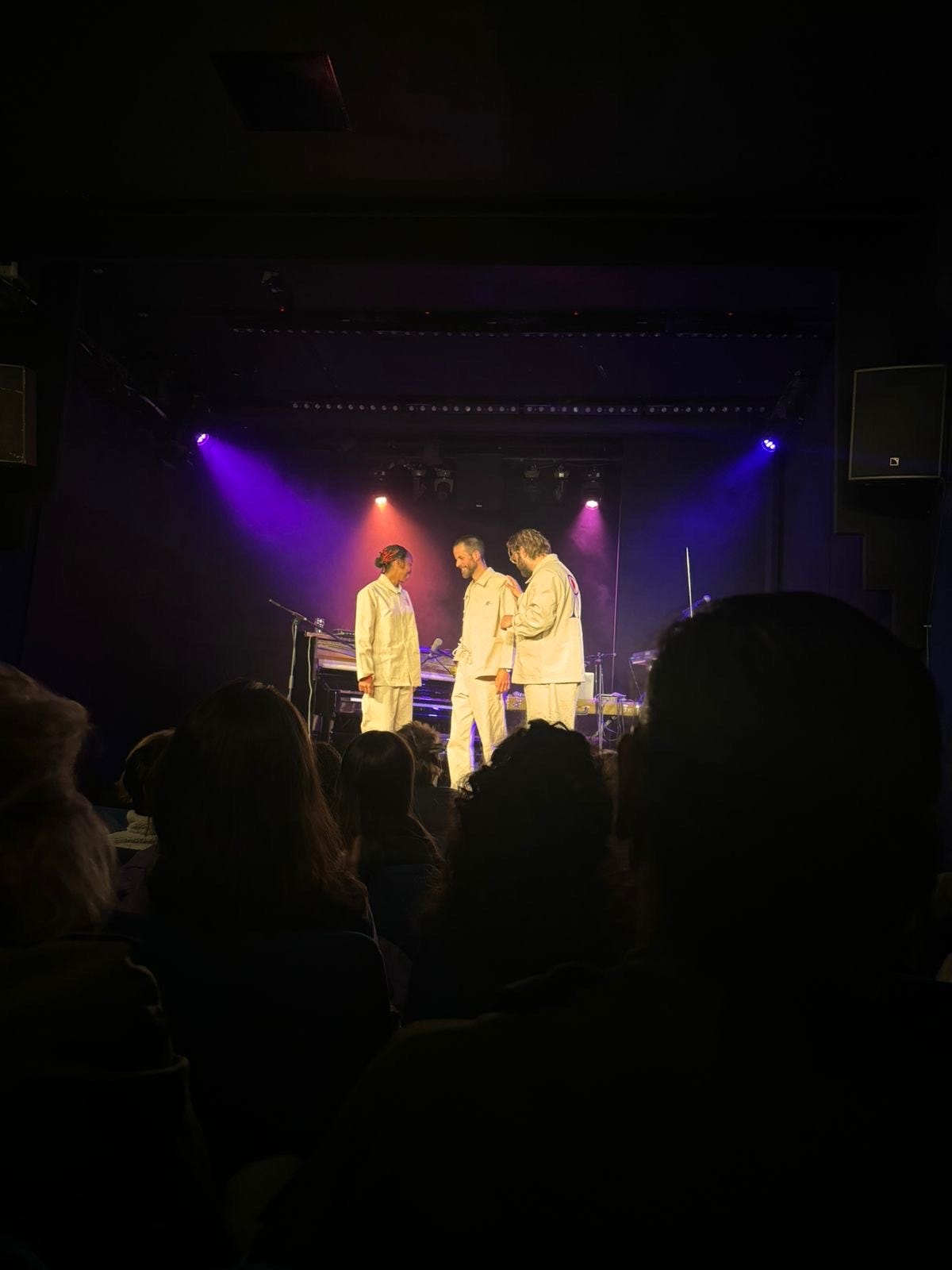
Rimma, our Creative Doula... and Culture Connoisseur!
I recently went to a concert featuring two bands — the main act was The Vernon Spring (pictured) , but to my surprise, it was Loa, a two-person band, whose performance resonated with me on a much deeper, more visceral level. Both bands spoke about being grateful for the privilege of creating and performing at a time when horrendous crimes against humanity are taking place — specifically referencing the genocides happening in Gaza and Congo. What struck me most was how the overwhelming feeling of helplessness and sorrow in the face of global atrocities was transformed into something beautiful through music. One song I would recommend to everyone is “Hold On” by Loa, with lyrics like: “Hold on, you’re not lost, you’re just not the same, so everything else feels strange”, “I dove down deep, I got lost down there, forgot how to breathe”, and “you hold the ground you plan to seed”. These lines spoke directly to that sense of disorientation and quiet perseverance. Their five-track album felt like a balm applied directly to an ache I didn’t know how to name — it moved me to tears more than once.
If you would want to join our community or support us, don’t hesitate to get in touch at contact@networkofempathy.org.
🪴 Vines of Community
In this space we foster connection and inspiration by sharing stories, poems, and thoughts of community members.
For May, we are sharing resources and avenues to explore alternative systems and some thoughts from Amena Sharaf on the feminist solidarity and community.
On development: Amartya Sen and Martha Nussbaum
On system change for people and planet: WEDO’s Feminist Action Nexus for Economic and Climate Justice
On the Rabat convening, with recommended readings: rabat.wedo.org
Food for thought: Amena Sharaf from MENAFEM Movement on Feminist Solidarity and Community
Reflecting on Rabat
The saying "If you want to go fast, go alone; if you want to go far, go together" is often a guiding principle in our work to alleviate the struggles of our people and build a more just world. The global feminist convening provided a space to explore not only the possibilities and power of moving forward together but also the challenges that come with the long journey toward justice. We are no longer limited to gathering only when given permission or opportunity, we now create those opportunities ourselves. Yet, even as we raise concerns about shrinking civic space in multilateral processes, we risk losing sight of the true essence of multilateralism, the essence I believe was revived in the convening: community.
If you would want to join our community or share your work (art, photography, writing, or thoughts—any form of self-expression!), don’t hesitate to get in touch at contact@networkofempathy.org.