

Dear fellow empath,
In this edition of our newsletter you’ll find:
🌱 Liberation Through Healing: Dr. Abu-Sittah’s Work in Conflict Zones
💧 The upcoming noe circle - Reflecting on Communities of Care
🪴 Inspiration for 2025 from the noe team
Enjoy!
Your noe team
Did a friend forward you this email? Sign up to receive your own copy of the noe newsletter full of inspiration, empathy knowledge, and connection.
Contribute! You would like to contribute to our community column, be featured by our noe stories, or join our next noe circle? Shoot us an email: contact@networkofempathy.org
🌱 Planting Seeds
In this section we share thoughts and concepts around empathy that have inspired us and made us think.
The moment we cease to hold each other, the sea engulfs us and the light goes out. - James Baldwin
What if we lived in a world where care wasn't just an individual act, but a collective practice?
Audre Lorde, who coined the term 'self-care,' originally meant it as a radical act of survival for marginalized communities—before it was appropriated by the dominant cultural discourse. Her vision reminds us that true care is deeply intertwined with collective liberation and justice.
At Network of Empathy, we believe that thriving communities start with intentional care – for ourselves, for each other, and for the world around us. Whether it's supporting a friend in crisis, advocating for systemic change, or simply listening deeply, every act of empathy strengthens the web of human connection.
A Doctor’s Role in Liberation
Similarly to self-care health care can also be linked to collective survival. Liberation medicine is a movement dedicated to decolonizing medical practices by creating autonomous health ecosystems that serve marginalized communities. It emphasizes culturally competent care, self-determination, and dismantling oppressive structures within healthcare systems.
The story of Dr. Ghassan Abu-Sittah is a prominent example of what liberation medicine can look like. He is a plastic and reconstructive surgeon based in London who has dedicated his career to providing medical care in conflict zones, particularly in Gaza.
Dr. Ghassan Abu-Sittah's journey into liberation medicine was deeply personal. Growing up witnessing and living the struggles of displaced and war-affected communities, he felt a profound responsibility to use his medical skills as a form of resistance and healing. His commitment to serving in conflict zones stems from a belief that healthcare is not just about treating wounds but about restoring dignity and challenging the structures that perpetuate suffering. His work embodies the intersection of medicine and justice, demonstrating that care itself can be an act of defiance against oppression. More than stubbornly resisting violence by surviving, his work is highlighting the value that is inherent to each individual life. Every life is worth saving.
Dr. Abu-Sittah practices liberation medicine through his work providing surgical care in conflict zones, including Iraq, Lebanon, Syria, Yemen, and Gaza. His expertise in reconstructive surgery has helped countless individuals affected by war and displacement.
Beyond his medical practice, Dr. Abu-Sittah is an academic leader, serving as an Honorary Senior Lecturer at Imperial College London and a Visiting Senior Lecturer at King’s College London. His research and advocacy shed light on how conflict systematically dismantles healthcare infrastructures.
Dr. Abu-Sittah's journey underscores the importance of empathy and collective care in building resilient communities. His work serves as a powerful reminder of the role each of us can play in fostering a culture of compassion and support.
To read more about Dr. Abu-Sittah's experiences and insights, check out his interview here.
💧 Watering the Mind
In this section we share updates from the noe team and concrete offers that allow you to build emotional intelligence and resilience skills.
Over the past month, one of NOE’s co-founders, Rimma, has spent time at home in Almaty, Kazakhstan, surrounded by her close ones. During this time, she realized just how much community care can nurture a weary heart.
(Note from the author: A special shout-out to Tomer, Ramilya, and Aissulu—your presence, your deep understanding, and the way you held space for me reminded me of the depth of care we are capable of offering one another. In those moments, I felt seen, understood, and supported with everything I had to bring.)
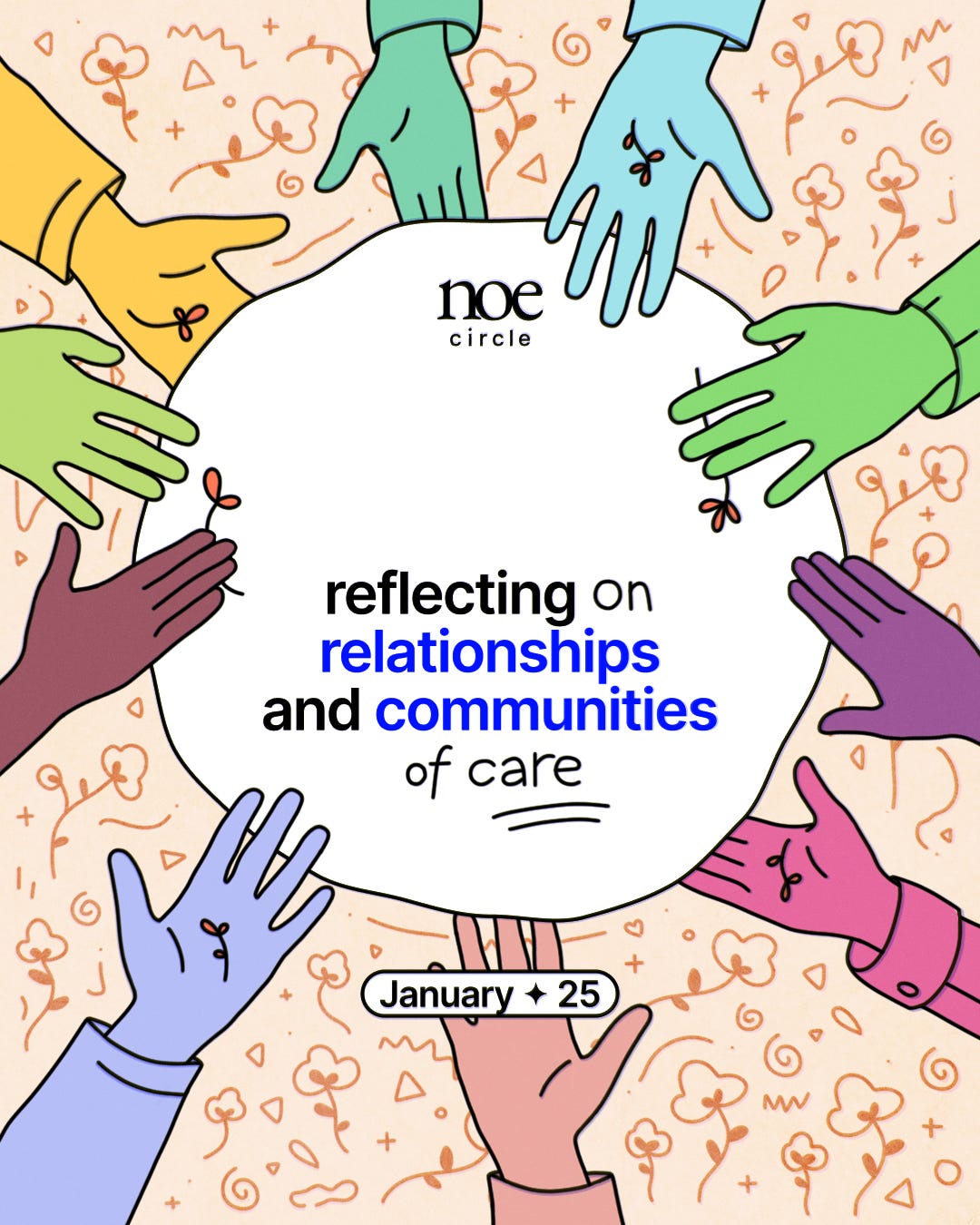
noe circle - Reflecting on Relationships and Communities of Care
As we step into 2025, let’s shift our focus from individualistic goals and dreams to something greater—thriving together as a community. We can only flourish if our communities do. Join our next noe circle where we will explore the importance of care as a collective practice. This gathering will be a space for deep listening, sharing experiences, and learning practical ways to strengthen our networks of support. Together, we can foster more resilient communities that prioritize empathy, justice, and collective healing.
If you want to join us for the next circle on January 25, sign up now through the link below!
If you would want to join our community or support us, don’t hesitate to get in touch at contact@networkofempathy.org.
🪴 Vines of Community
In this space we foster connection and inspiration by sharing stories, poems, and thoughts of community members.
Orbital by Samantha Harvey (2023)
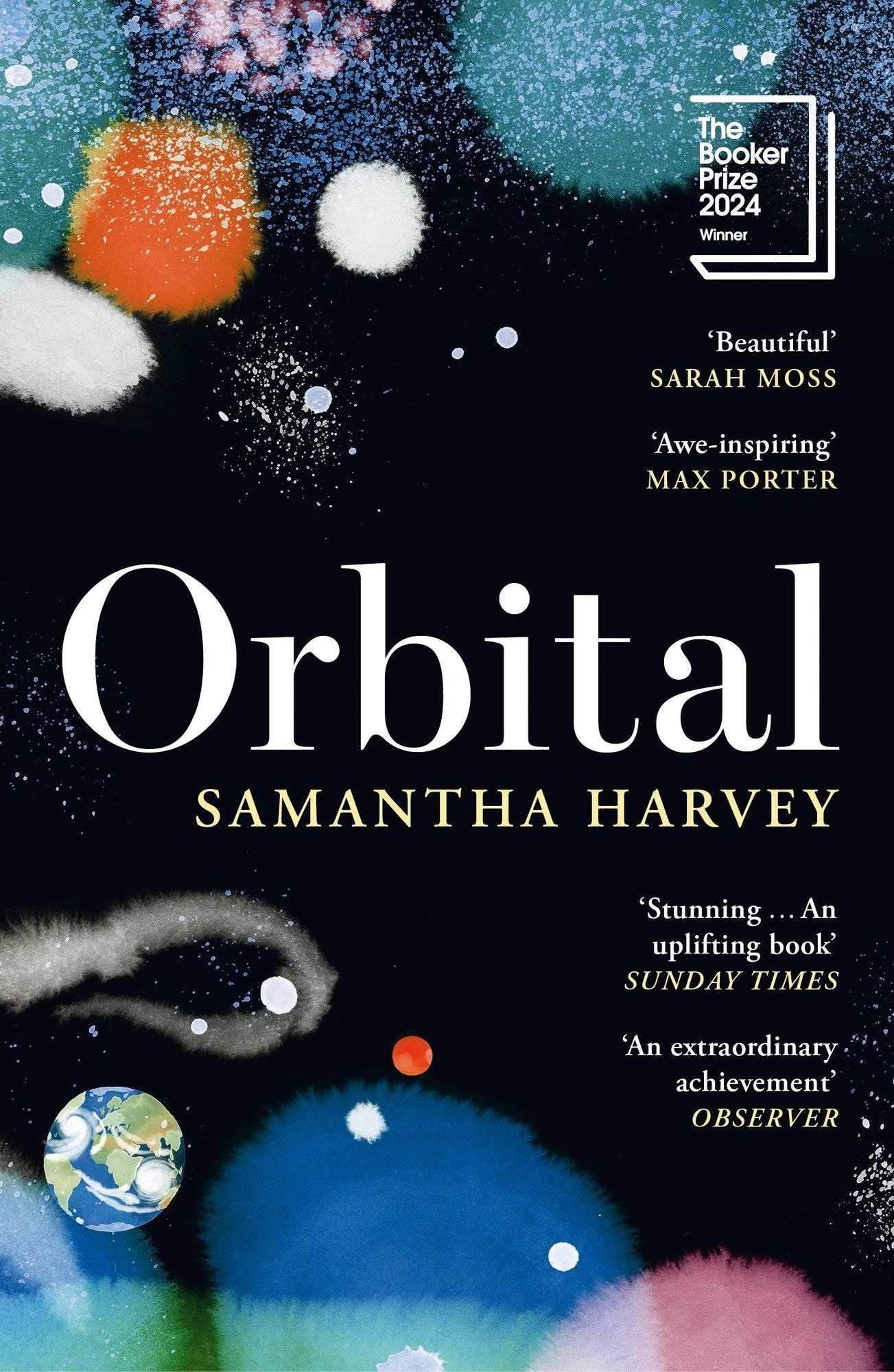
The novel, told over the course of 24 hours, follows six astronauts and cosmonauts from Japan, the United States, Britain, Italy, and Russia, four men and two women, aboard the International Space Station as they orbit Earth. In no more than 100 pages this book manages to touch upon the big questions of humanity while describing the beauty of our shared home, planet earth. And while the author doesn’t shy away from addressing existential questions and highlighting the irreversible effect that humans have had on our planet, she nonetheless manages to instill a sense of awe and optimism.
“Before they came here there used to be a sense of the other side of the world, a far-away-and-out-of-reach. Now they see how the continents run into each other like overgrown gardens - that Asia and Australasia are not separate at all but are made continuous by the islands that trail between. […] Continents and countries come one after the other and the earth feels - not small, but almost endlessly connected, an epic poem of flowing verses. It holds no possibility of opposition.”
Picnic by Kim Yong-gyun (2023)
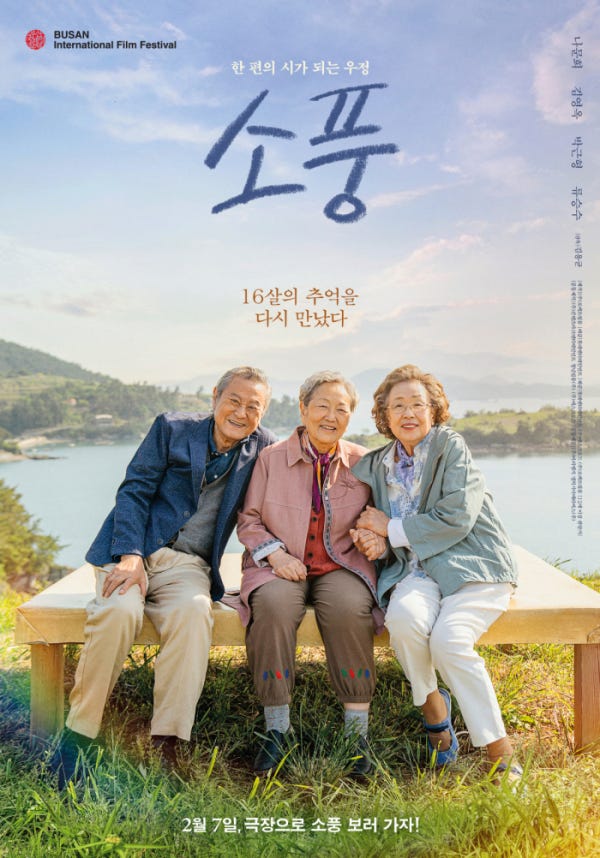
his heartfelt 2023 South Korean family drama, directed by Yong-gyun Kim, tells the story of Eun-sim, an 80-year-old woman who returns to her hometown after more than six decades. As she reconnects with old friends, she embarks on a deeply moving journey of reminiscence and rediscovery, reminding us of the power of community, friendship, and shared history.
Through its tender storytelling and emotionally rich narrative, Picnic captures the essence of aging, memory, and the enduring impact of human relationships. It beautifully illustrates how returning to one’s roots can be both healing and transformative, shedding light on the importance of connection and the nostalgia of places and people once left behind. The film's quiet yet profound moments encourage us to reflect on the relationships that have shaped our lives and the significance of holding onto our shared past.
More than just a film about one woman’s journey, Picnic serves as a universal reminder that community is essential for people of all ages. It offers a poignant exploration of how relationships nurture us, provide comfort in times of change, and create a sense of belonging that transcends generations. Eun-sim’s story is a testament to the resilience of the human spirit and the irreplaceable bonds that sustain us throughout our lives.
A Practice in Self-Compassion
The Inner Smile Meditation is a simple yet powerful practice rooted in Taoist tradition that invites us to turn inward and cultivate warmth, gratitude, and self-compassion. By directing a gentle smile toward different parts of the body, we acknowledge our own presence and extend kindness to ourselves. This practice helps release tension, improve emotional well-being, and foster a sense of inner peace.
Taking a moment each day to connect with yourself through an inner smile can be a transformative act of self-care. It reminds us that healing begins within and that our well-being is deeply connected to how we treat ourselves. As we strengthen our inner resilience, we become more capable of showing up for our communities with empathy and care.